
By Ambrose Obioma Okehi (News Emperor)
The Nigeria Customs Service (NCS) and the Presidential Enabling Business PEBEC) are teaming up to fast-track digital reforms and create a paperless port environment. This collaboration aims to dismantle bureaucratic bottlenecks, boost efficiency, and position Nigeria as a competitive hub for global trade.
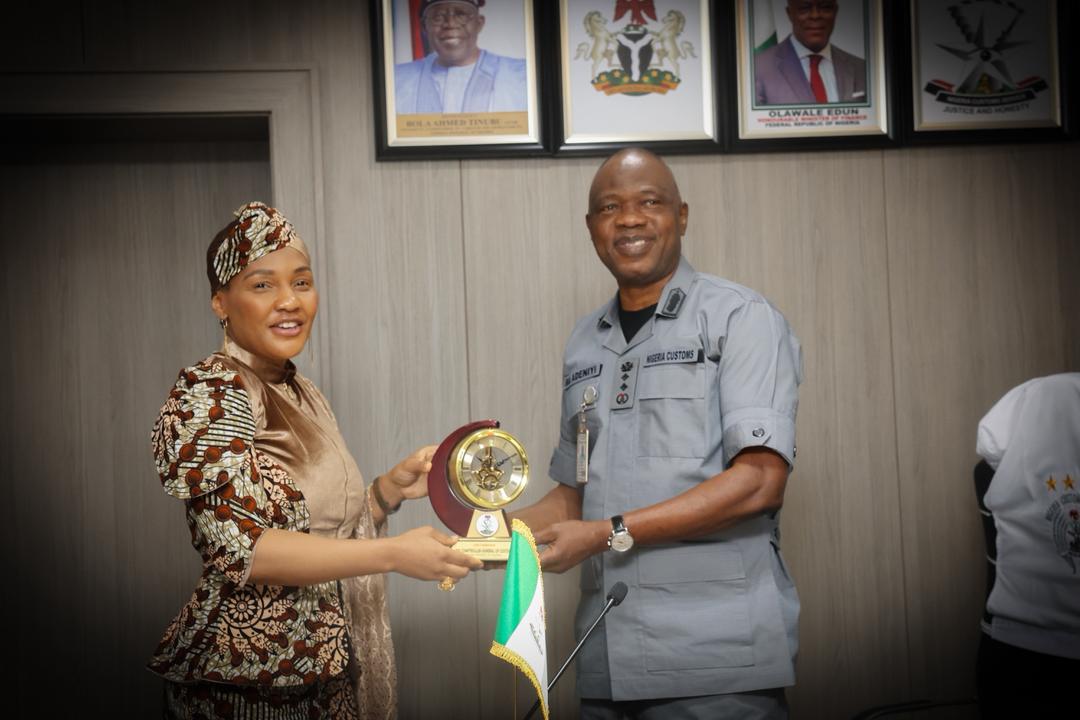
The CG of Customs stated this on Friday, March 6, 2026 at the Customs headquarters, Maitama, Abuja while receiving the DG of PEBEC.
Comptroller-General of Customs, Adewale Adeniyi, emphasized the NCS’s commitment to digital transformation, citing recent initiatives such as the Time Release Study (TRS) and the digitization of core processes like pre-arrival documentation and cargo declaration. “We’re advancing plans to establish a fully paperless Customs environment,” Adeniyi said.
The NCS has also been engaging with stakeholders, including the American Business Council and trade associations, to address operational concerns and strengthen cooperation. The TRS study, conducted with the World Customs Organisation, has provided valuable insights to guide reforms.
PEBEC’s Director-General, Princess Zahrah Audu, highlighted the 90-day Business Environment Enhancement Programme, aimed at addressing operational challenges and improving efficiency across business-facing agencies. The programme includes a collaborative assessment of Lagos ports, identifying key challenges and recommending improvements.
The partnership focuses on leveraging technology, strengthening joint vessel boarding, and enhancing coordination among regulatory agencies. The NCS is investing in scanning technology and ICT infrastructure to support risk-based cargo management and reduce physical cargo examination.
The collaboration is expected to yield benefits such as reduced clearance times, increased trade efficiency, and improved competitiveness. The NCS and PEBEC are committed to sustained cooperation, leveraging trade facilitation tools like the Authorised Economic Program and One-Stop-Shop to drive Nigeria’s trade efficiency agenda.
Deputy Comptroller-General of Customs, Oluyomi Adebakin, emphasized the importance of smarter deployment of personnel based on vessel schedules, rather than extending working hours. The NCS is working to address operational issues and improve port efficiency, with a focus on stakeholder engagement and collaboration.
The initiative is part of the Federal Government’s efforts to improve the business environment and drive economic growth. With the NCS and PEBEC working together, Nigeria’s ports are set to become more efficient, competitive, and attractive to international trade.
Comptroller-General of Customs, Adewale Adeniyi, emphasized the NCS’s commitment to digital transformation, citing recent initiatives such as the Time Release Study (TRS) and the digitization of core processes like pre-arrival documentation and cargo declaration. “We’re advancing plans to establish a fully paperless Customs environment,” Adeniyi said.
The NCS has also been engaging with stakeholders, including the American Business Council and trade associations, to address operational concerns and strengthen cooperation. The TRS study, conducted with the World Customs Organisation, has provided valuable insights to guide reforms.
PEBEC’s Director-General, Princess Zahrah Audu, highlighted the 90-day Business Environment Enhancement Programme, aimed at addressing operational challenges and improving efficiency across business-facing agencies. The programme includes a collaborative assessment of Lagos ports, identifying key challenges and recommending improvements.
The partnership focuses on leveraging technology, strengthening joint vessel boarding, and enhancing coordination among regulatory agencies. The NCS is investing in scanning technology and ICT infrastructure to support risk-based cargo management and reduce physical cargo examination.
The collaboration is expected to yield benefits such as reduced clearance times, increased trade efficiency, and improved competitiveness. The NCS and PEBEC are committed to sustained cooperation, leveraging trade facilitation tools like the Authorised Economic Program and One-Stop-Shop to drive Nigeria’s trade efficiency agenda.
Deputy Comptroller-General of Customs, Oluyomi Adebakin, emphasized the importance of smarter deployment of personnel based on vessel schedules, rather than extending working hours. The NCS is working to address operational issues and improve port efficiency, with a focus on stakeholder engagement and collaboration.
The initiative is part of the Federal Government’s efforts to improve the business environment and drive economic growth. With the NCS and PEBEC working together, Nigeria’s ports are set to become more efficient, competitive, and attractive to international trade.