
The newly elected executive of the Maritime Reporters Association of Nigeria (MARAN) has pledged to deepen collaboration with the Nigerian Ports Authority (NPA) in support of Nigeria’s ongoing port modernisation drive and broader maritime sector development.
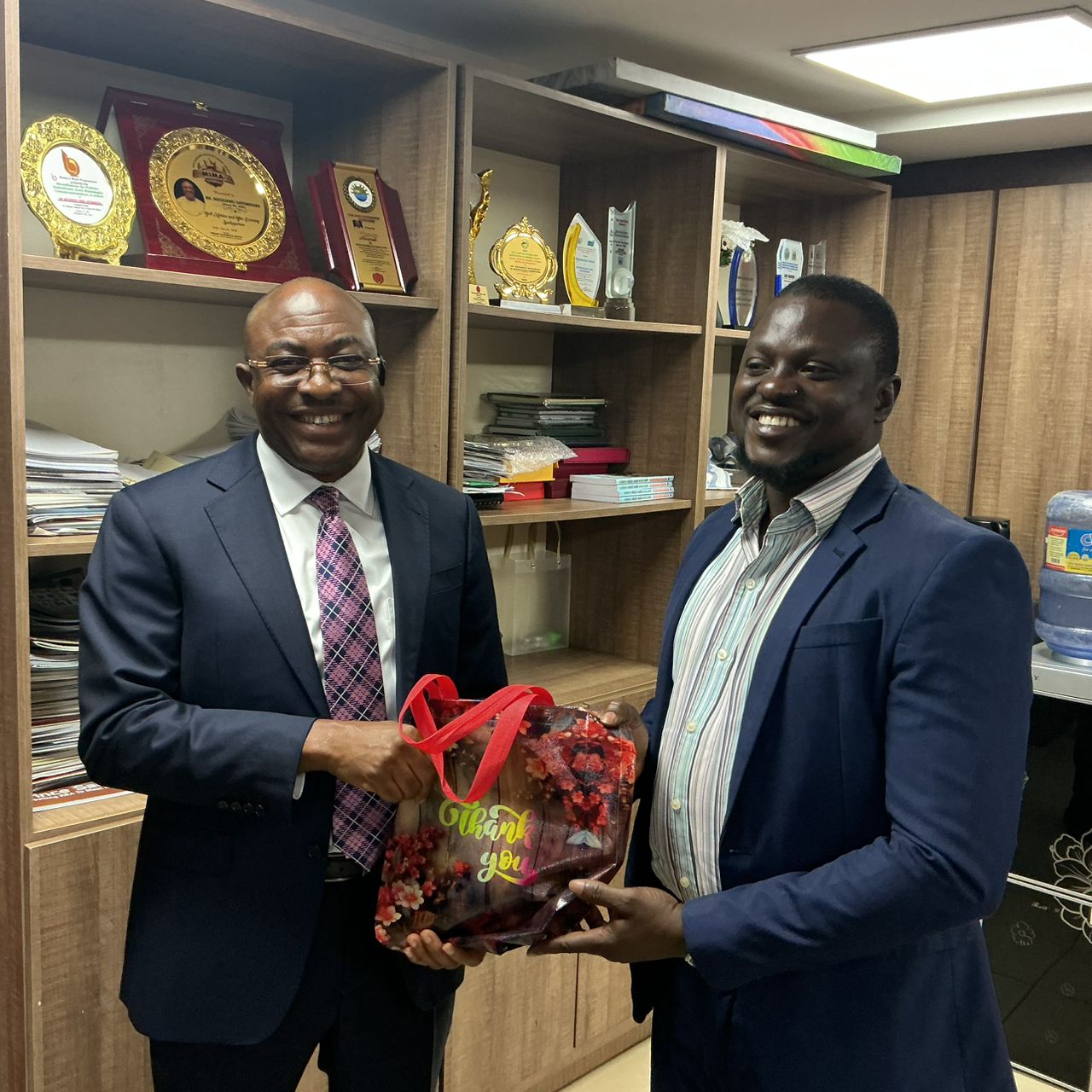
The commitment was made during a courtesy visit by the new MARAN leadership, led by its President, Oluyinka Onigbinde, to the General Manager, Corporate and Strategic Communications of the NPA, Ikechukwu Onyemekara, at the authority’s headquarters in Lagos.
Speaking during the visit, Onyemekara described the emergence of the new MARAN leadership as a positive development for the maritime media landscape, while commending the association’s electoral committee and outgoing leadership for conducting a peaceful and credible transition process.
According to him, the successful conduct of the election demonstrated maturity and institutional stability within the association, noting that many organisations often struggle with leadership transitions.
“What they have done is something that deserves commendation.
Some organisations would have scattered if not for a group of people who ensured stability and successfully midwifed the election process,” he said.
He further praised the association for producing professionals who have continued to distinguish themselves across different sectors of the economy, stressing that MARAN has remained a strong platform for maritime journalism and policy engagement in Nigeria.
The NPA spokesperson also highlighted the longstanding relationship between the authority and MARAN, assuring the new executive of the agency’s support and cooperation.
“I have known the president for a very long time and we have built a relationship over the years. You can rest assured that relationship will continue to grow. MARAN remains a very strategic stakeholder within the maritime industry,” Onyemekara stated.
He emphasised that the maritime sector was entering a critical phase in its history with the Federal Government’s port modernisation initiative, which he said would significantly redefine port operations, competitiveness and trade efficiency in Nigeria.
According to him, the modernisation programme is designed to position Nigerian ports for larger vessel traffic, improved cargo handling capacity and increased regional transshipment opportunities.
He noted that the growth currently being witnessed at the Lekki Deep Sea Port further validates the need for Nigeria to upgrade its port infrastructure to meet global shipping realities.
“Most vessels being built globally today are designed for large draft channels. If we fail to position ourselves appropriately, we will simply be wasting time. What we have seen in our first quarter operational statistics will become insignificant compared to what the industry can achieve after modernisation,” he explained.
Onyemekara added that Nigeria possesses the demographic and economic fundamentals needed to emerge as a major maritime hub in Africa, stressing that efficient and modern ports would naturally attract higher cargo volumes and transshipment business.
“The economy is here, the population is here, and the market is here. Once you combine these with an efficient port system, Nigerian ports can become major transshipment hubs within the region,” he said.
Drawing comparisons with developments in the aviation sector globally, he explained that countries seeking greater competitiveness were investing heavily in infrastructure expansion rather than merely cosmetic upgrades.
“We are concentrating on where it matters most, where the vessels come in. That is the essence of the port modernisation project,” he added.
The NPA spokesman also called for stronger media support in educating Nigerians on the importance of the maritime sector and the economic value of port reforms.
He stressed that maritime journalism remains critical to shaping public understanding and stakeholder acceptance of ongoing reforms, particularly the modernisation initiative.
“The knowledge of the port industry is still not where it should be. The role of journalists in educating the public is extremely important, and we are ready to support initiatives that will strengthen maritime journalism,” Onyemekara said.
He also expressed support for specialised training programmes for maritime journalists, especially in areas relating to port infrastructure, logistics, shipping economics and trade facilitation.
Responding, MARAN President, Oluyinka Onigbinde, appreciated the warm reception accorded the delegation and reiterated the association’s commitment to constructive engagement with industry stakeholders.
He further stressed the need for continuous professional training for maritime journalists, particularly as the industry enters a new era driven by infrastructure expansion and modernisation.
“Now that the industry is embarking on an ambitious programme of infrastructure expansion and modernisation, journalists also need to be trained adequately so they can properly understand and project these developments to the public,” he said.
The MARAN president noted that capacity building for journalists would not only improve reportage but also contribute to better public understanding of maritime policies, investments and reforms.
The visit forms part of the new MARAN leadership’s broader stakeholder engagement initiative aimed at strengthening industry relationships and promoting collaborative efforts towards the growth of Nigeria’s maritime sector.